
Saltmarsh Sparrow
On The Margins
Our atavistic fears of marshes and wetlands have long manifested as monsters and demons, instilling in us a deep hostility to these liminal places and all that lives within them. We have drained them for agriculture, reclaimed them for modern urban infrastructure and used them as dumps. While we have come to understand the ecological importance of saltmarshes, the legacy human impacts, combined with sea level rise, are causing the extinction of the Saltmarsh Sparrow, a species facing extinction as it is increasingly unable to successfully breed in remaining habitat as tidal flooding becomes both more severe and more frequent. Restoration efforts focus on repairing damage and restoring the resiliency of marshes - but this may not happen in time to save the Saltmarsh Sparrow.
Greater Prairie Chicken
The Fractured Landscape
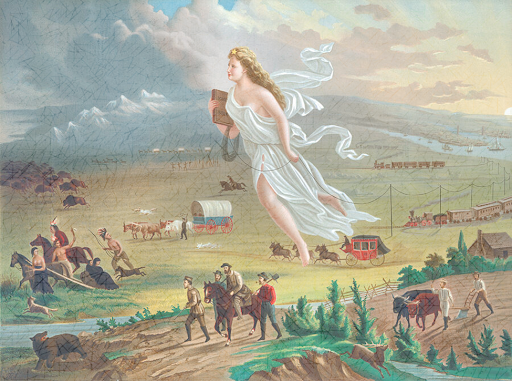
Manifest Destiny, the steel plough and the invention of barbed wire fencing fundamentally altered the ecology of the Western plains in ways that reverberate today, both as ideology and practice. From Buffalo Bill to contemporary pick-up trucks that promise to “bring the world to its knees,” our hagiography has been of domination and economic gain. The Greater Prairie Chicken, an iconic bird representing the wild prairie and all its endless possibility, faces continuing extirpation due to unfettered development, encroachment of invasive plants and trees (accelerated by increased atmospheric CO2) and incompatible ranching and agricultural practices. The prairie chicken relies on heterogeneous and sufficiently contiguous open habitat for successful mating and breeding. Such healthy, expansive, grassland is more drought resilient and most effective at sequestering carbon. However, certain grazing regimes, driven by short-term profits, promote uniform grassland and require more fencing and water development. One modern twist to grassland management is the use of GPS collars on cattle to move them in a way that better supports diverse grasslands while reducing fencing costs and restoring (at least) a visual idea of the open prairie - "What's good for the bird can be good for the herd."
Whimbrel
Resilience
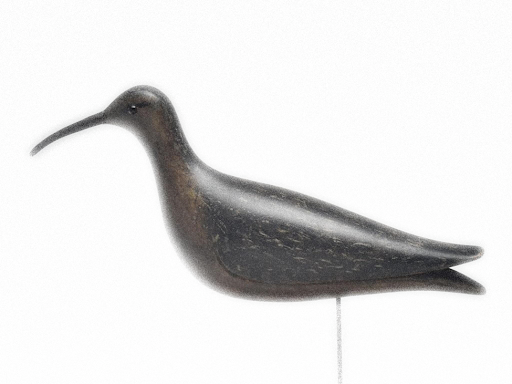
200 years ago, after nesting in the Arctic tundra, the Eskimo Curlews headed south along the Atlantic shore where they stopped over on Miscou Island, New Brunswick to fatten up on crowberries. Unregulated market gunners set up decoys on Miscou’s marshes to lure the birds in. The wagon ruts from the carts carrying the dead birds to market are still visible. Visualizing the extraordinary bounty that existed is crucial to understanding what has been irrevocably lost - a subtle generational attrition. Decoys are now constructed for the film by a master craftsman and replicated through visual effects work to recreate for us the arrival of the dough bird to Miscou: those glorious flocks of birds that famously darkened skies. The Whimbrel, a living analog of the curlew, reflects the resilience of species if they are given even the slimmest opportunity. The Lacey Act and Migratory Bird Act of the early 1900s were pivotal lifelines for the Whimbrel, and prove the efficacy of collective action and legislation.
Today Whimbrels still traverse their ancient coastal migratory routes between South America and the Arctic, facing storms increasingly amplified by climate change. Scientists track such migrations, including those of the Machi and Goshen, two whimbrels who swerved around hurricanes on multiple 15,000 mile flights. Seeking refuge in the marshes of Guadalupe, they were shot by French sport hunters. Their story inspires a new generation of conservationists.
Northern Gannet
Bastion
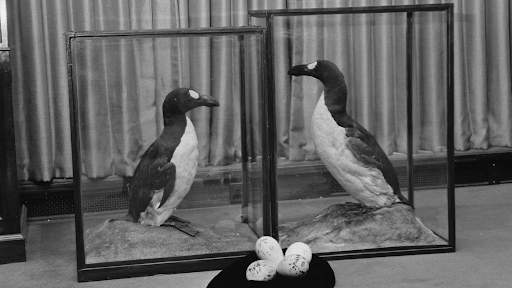
Visiting Newfoundland in 1833, John James Audubon witnessed hunters and “eggers” decimate Gannets in their nesting colonies. Gannet meat was a source of bait for the thriving Cod industry, and the birds, instinctually anchored to their ancestral breeding sites on Cape St. Mary's were easy prey. By the mid-1800s, lawmakers noted the precipitous decline in species population and enacted strong conservation regulations. Such laws came too late for another plentiful resident of the north Atlantic: the docile, flightless Great Auk. The last solitary Auk was clubbed to death on an Arctic island in 1852. Today, Cape St. Mary's and the Auk's previous habitat of Funk Island among the most protected places on earth. Thriving Gannet colonies line the cape's sheer cliffs. Fledglings launch themselves into space, drifting like wind-blown seeds down to the rough, curling sea. Yet their current plenitude is again precarious: the centuries' old protections of such wildlife sanctuaries are increasingly meaningless as rising sea temperatures impact fish populations. Gannets and other sea birds now face mass starvation. However, new alliances are forming between conservationists and the fishing industry to protect fish stocks - and therefore providing the chance for the gannets to continue to thrive.
Whip-poor-will
Sprawlification
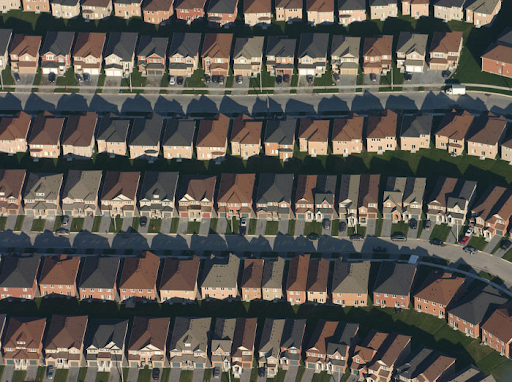
A hugely profitable industry is devoted to the curating of lawns and green spaces in pursuit of a modern idea of neatness. After WWII, with its violence and chaos, suburbs such as Levittown offered Americans order and regimen: the man upon his mower echoing the divine rightness of Manifest Destiny, the straight lines indicating moral virtue and control. Whip-poor-wills were once ubiquitous to varied habitats now lost to housing developments. Our lawns, cut and chemically-treated, destroy the insects on which they (and so many other species) depend. Thirty years ago, their strange calls heralded summer for millions of American children. But like the glimmer of stars and the sweep of bats, such sound is diminished or completely extant in our bright, modern nights. Yet, remnant populations burgeon in the messy scrub of powerline corridors and rewilding projects bring back lost species. In neighborhoods across the country, gardeners are transforming private and public spaces for wildlife. Even Les Tuilleries in Paris - once the apogee of landscape aesthetic - is creating rambunctious native plant gardens that teach us to value the untended.
Bermuda Petrel
Redemption
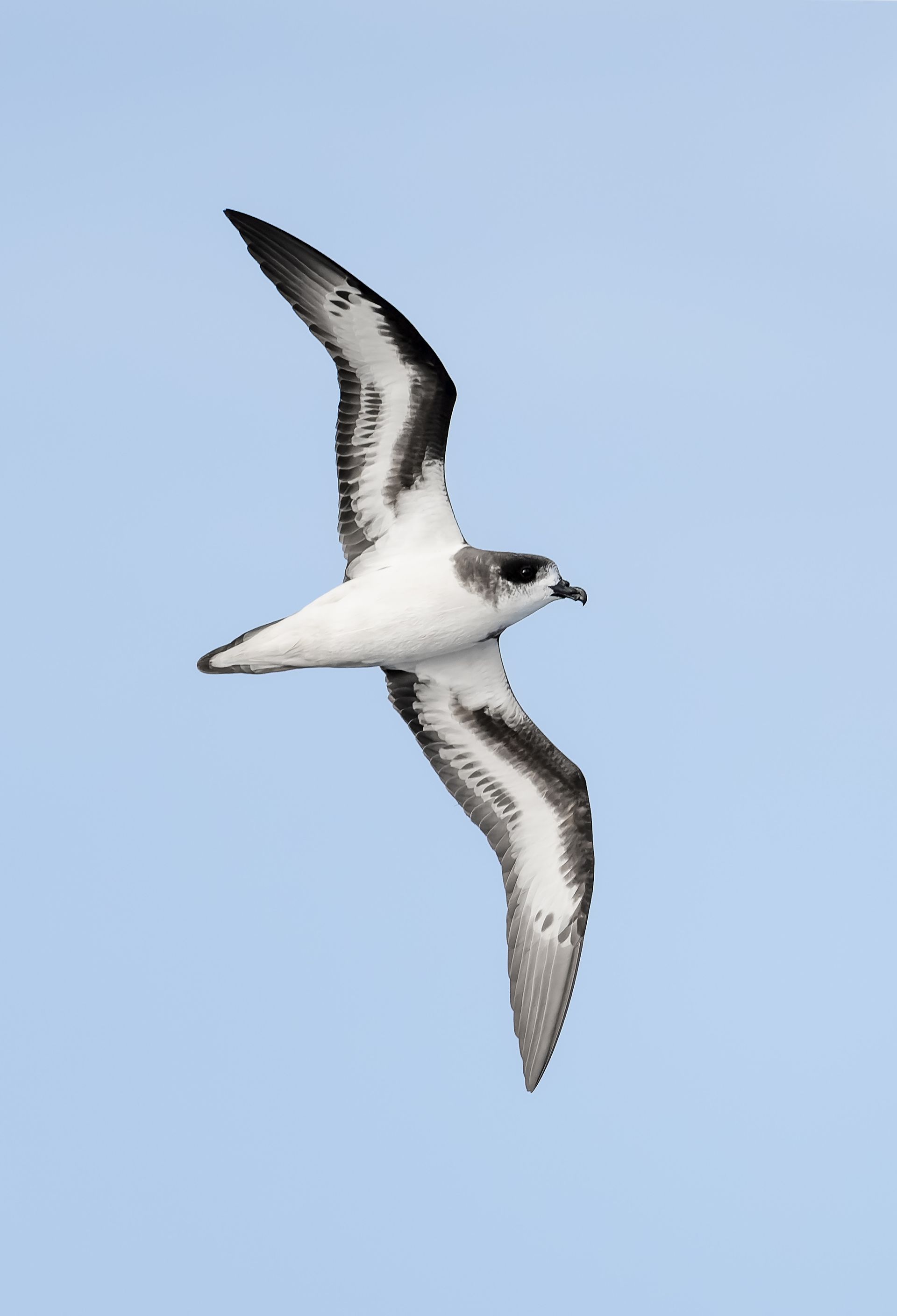
For nearly a century the Bermuda Petrel was believed extinct, the victim of two hundred years of the island’s intense colonization. And then, in 1951, came the discovery of 18 breeding pairs on a rocky outcrop in the Atlantic. The “Cahow” was labeled a Lazarus species, giving hope that other species, lost to human impact, might persist - even during the industrial age with its large scale environmental decimation. Ocean-going birds lead lives of great mystery and have become symbols to us of the ineffable. Consider Coleridge’s famous poem, The Rime of the Ancient Mariner:
At length did come an Albatross Through the fog it came; As if it had been a Christian Soul, We hailed it in God’s name. On remote Pacific atolls, amid the rusting gun turrets of WWII, Bonin’s Petrels and Albatrosses congregate and breed in vast numbers before embarking again on their transoceanic flights. Their lives are lived beyond our purview in the space of sky and sea - a mystical arena that fuels our imagination and sustains many religious beliefs. Johnson’s Atoll, a designated wildlife refuge, is now slated to be leveled and converted into a Space X port for Mars exploration. Such a proposition reflects the ageless conflict - not between humans and nature, but between resource barons and nature. As the most vulnerable communities in the world (including here in the US) brace for the impacts of climate change, the story of the Lazarus bird, offers us the opportunity to re-evaluate our priorities. Against the manifesto of exploitation and greed, Nature Positive movements rise up, and organizations like Beyond Bretton Woods offer alternative economic models that include nature capital. The hundreds of thousands of seabirds swirling and sweeping above the Aleutian Islands remind us of the bounty and beauty that still exist - not as a resource - but as a morally guiding force.

Peregrine Falcon
Adaptation
The story of the peregrine is often seen as a success. With its eyes positioned in front of its skull, giving it extraordinary visual acuity, this sleek predator has been able to make a successful shift from cliffs to the urban hunting grounds of tall glass buildings in cities like Chicago. We have forgotten that the species survived only because we outlawed the use of DDT, and we fail to properly understand the mechanism of adaptation. We prefer to identify with the clever hunter rather than the seemingly fragile migrants who have not figured out how to survive our skyscrapers - the song birds who die by the thousands in window strikes. In the blasting urban light, they are also easy prey to the peregrine. Millions of passerines migrate from as far as the Andes and the Amazon to our woods and our bird feeders every year. The Blackburnian Warbler, for instance, spends our winters in the cloud forests of Ecuador. Traveling on invisible currents of air that act like ancient highways, they are funneled by a powerful confluence of geography and wind towards Chicago. In mere decades, the city’s open sky has become cluttered by skyscrapers, deceptively reflecting the sky itself. For this deadly room of mirrors, they have no evolutionary response: they cannot suddenly “see” or sense floating glass. Such adaptation takes thousands of generations and depends on multiple complex environmental factors. Evolutionary scientists flip the question to us: is the human species truly able to adapt to climate change and environmental chaos ?
Ivory Gull
Oblivion
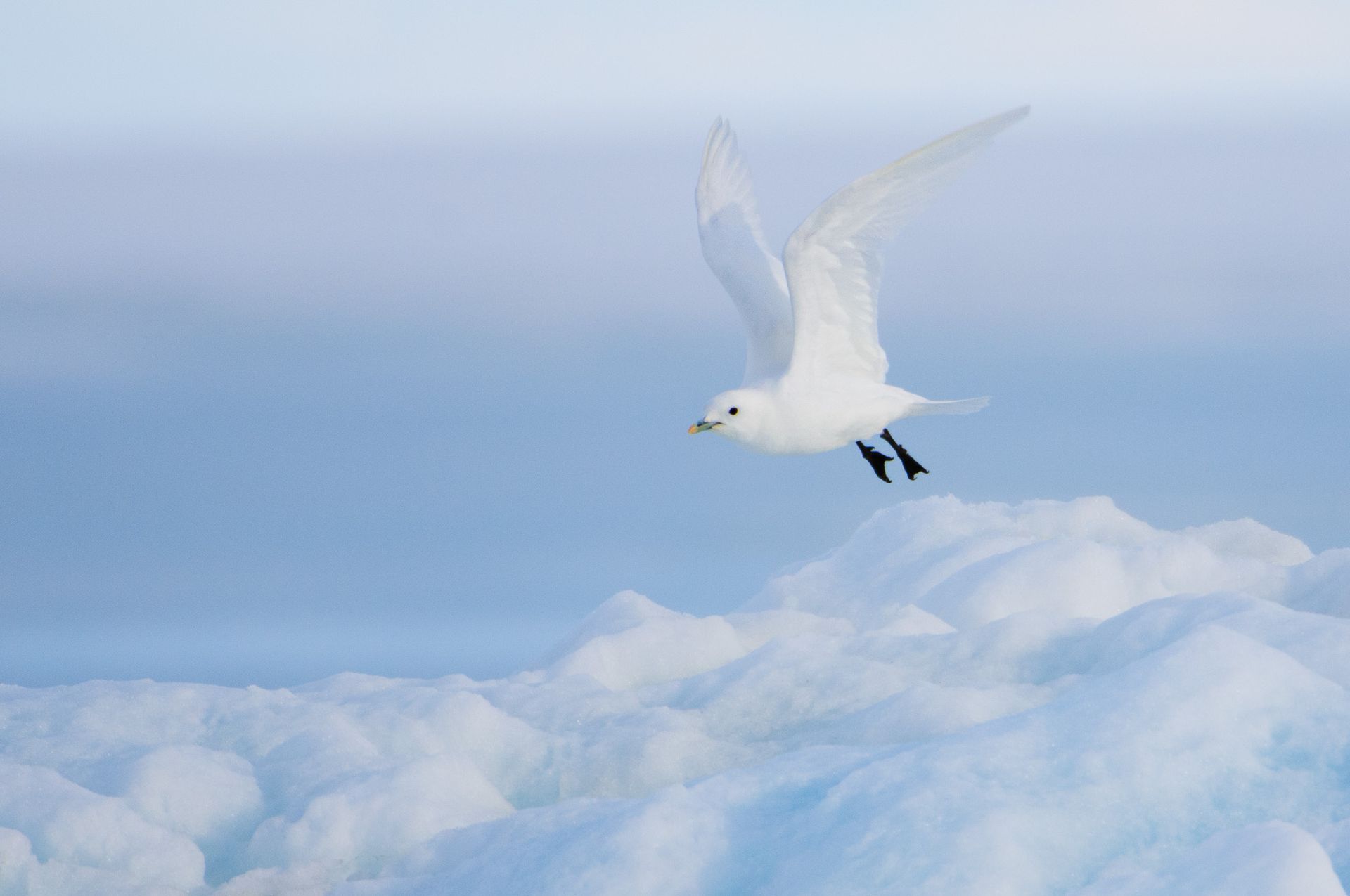
An aerial companion to the polar bear, Ivory Gulls are attracted to blood red upon the white snow, supplementing their diet by scavenging polar bear kills. These two species are bound in their unfortunate fate: as the pack ice upon which the bears depend vanishes in the heat of our new climate, so too do the gulls’ cold-loving lantern fish and bear-proffered carrion. Audubon, who obtained only specimens, painted an adult and a juvenile; yet that very image of continuity by generations is now fading. As ocean temperatures break record levels of heat, the entire Arctic system breaks down, leading to extinction by starvation for these magnificent gulls. In Audubon’s day - the cusp of industrialization and the conquest of the West with all its slaughter of bison and passenger pigeons - extinction of species seemed impossible, and it went against Biblical teachings. There remained the belief that, whatever the observed diminishment, there would always be more. Only in the mid-twentieth century, did scientists create surveys and methods to measure populations and begin to understand decline. Now, with our ability to travel globally – to explore and exploit every corner and crevice of this earth - and our knowledge of history and science, we have now a terrible omniscience: we can precisely quantify a species’ disappearance. We witness, in the steady drip of melting ice, and how this exquisite, wild white bird fades into the oblivion of extinction.